Recycling · Jul 9, 2026
A Guide to Industrial Scrap Wood Pickup and Recycling Processes
Written by TC Pallet
For manufacturers and distributors in Northeast Ohio, managing waste streams is a daily operational reality. While cardboard and plastic often have clear disposal paths, industrial wood waste is frequently a bottleneck. Piles of broken stringers, odd-sized crates, and shattered boards take up valuable floor space and create safety hazards for warehouse personnel. Managing this debris internally is cost-prohibitive and distracts from your core production goals.
Tri County Pallet operates a streamlined system designed to remove this burden from your facility. By treating wood waste as a resource rather than trash, our process ensures that your scrap is handled efficiently and diverted from local landfills. Understanding the transition from a pile of broken lumber at your loading dock to a finished mulch product helps clarify why a professional recycling partner is necessary for high-volume operations.
Assessing Volume and Trailer Placement
The process begins with an evaluation of your facility’s output. High-volume manufacturers typically require a dropped trailer solution. Instead of calling for a pickup every time a small pile accumulates, we place a dedicated van or flatbed at your dock. As your team generates broken pallets or scrap crating throughout the shift, they load the materials directly into the trailer. This keeps your warehouse floor clear and maintains a high standard of housekeeping.
For smaller operations or those with limited dock space, a live-load schedule might be more appropriate. In either scenario, the goal is to establish a predictable cadence. We analyze factors like the types of wood you generate and the frequency of your production cycles to ensure the trailer is swapped before it overflows. This proactive approach prevents the logistical headaches that occur when waste blocks essential traffic lanes.
What Qualifies for Industrial Wood Waste Pickup
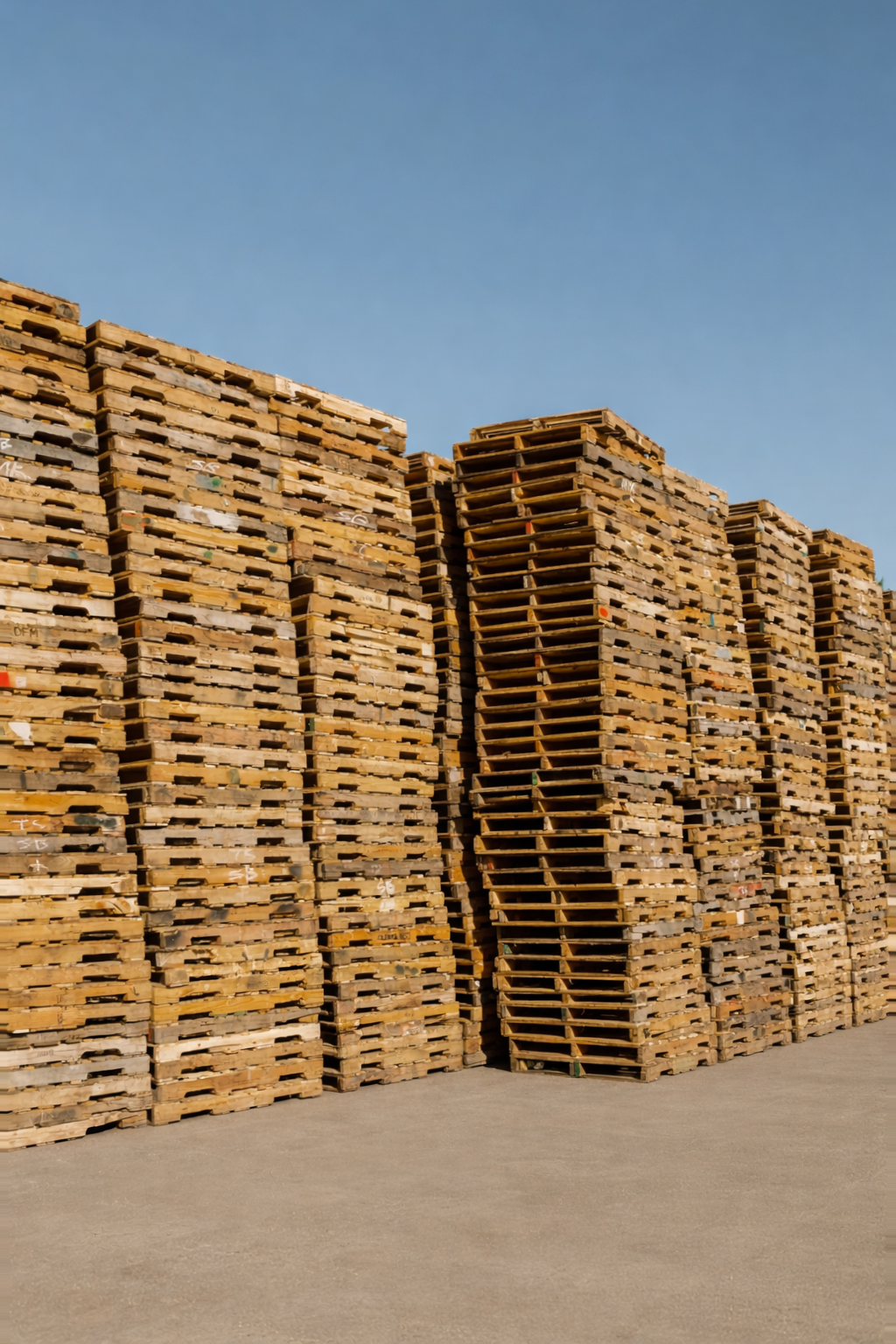
Not all wood waste is created equal. To maintain a functional recycling stream, we focus on specific materials that can be processed into mulch or biomass. When our team picks up a load, we are typically looking for items that have reached the end of their functional lives in a shipping environment. A well-built wooden pallet typically makes five to seven trips before needing repair, but once the structural integrity of the wood grain is compromised beyond repair, it enters the scrap stream.
- Broken stringer pallets that are beyond structural repair
- Odd-sized shipping crates and custom skids
- Clean, unpainted dimensional lumber scraps
- Broken hardwood and softwood shipping components
- Scrap wood containing standard nails or staples (which are removed during processing)
We ask that customers keep the wood separate from other debris. Trash, hazardous materials, and large metal components like hinges or heavy bolts can damage grinding equipment. By keeping the load clean, you ensure the material can be fully recycled rather than disposed of as general refuse.
Transportation and Sorting at the Akron Facility
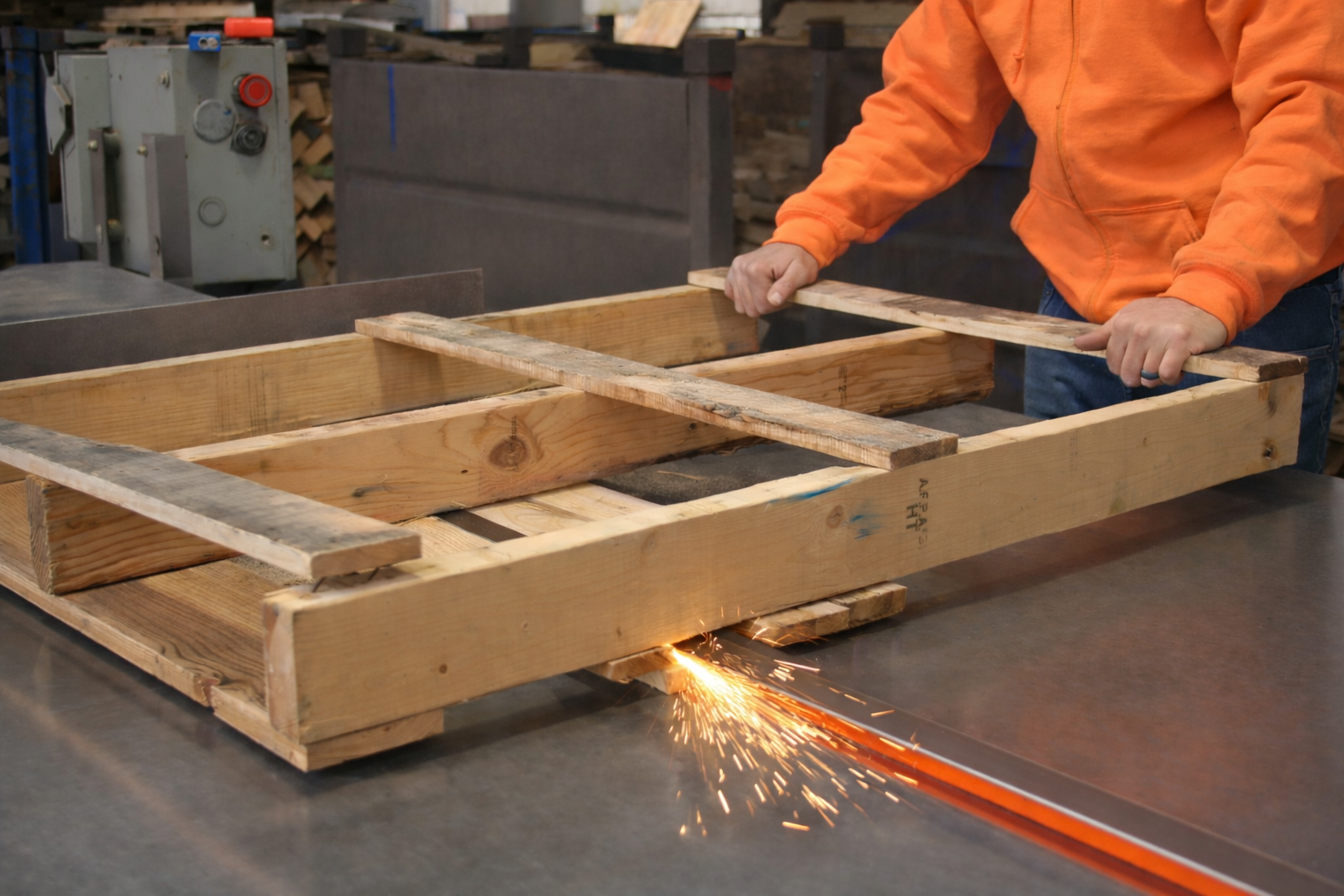
Once a trailer is full, we swap it for an empty one. The full load returns to our Akron facility where the sorting process begins. Pallet recycling in Akron generally involves three tiers: recovery, repair, and grinding. Our team inspects every incoming unit. If a pallet can be salvaged, it is sent to our repair line where we replace broken deck boards or stringers to return it to the supply chain as a recycled pallet.
Materials that fail the inspection—such as shattered boards or non-standard sized crating—are diverted to our scrap wood pile. This separation is critical for manufacturers who want to track their sustainability metrics. By identifying what can be reused versus what must be ground, we maximize the life cycle of the wood and reduce the demand for new timber production.
From Scrap Wood to Ground Mulch
The final stage for industrial wood waste is the horizontal grinder. This equipment processes large volumes of scrap wood into consistent fiber sizes. During this stage, powerful magnets are used to extract nails and fasteners from the wood. This metal is itself collected and sent to metal recyclers, ensuring that almost 100 percent of the incoming pallet is diverted from the landfill.
The resulting wood fiber is then screened and processed into landscape mulch. We offer both natural and colored varieties for residential and commercial applications. For a manufacturer, this means your unwanted shipping debris eventually serves a functional purpose in local landscaping projects. It is a closed-loop system that benefits the local economy and reduces the environmental footprint of your logistics department.
Partnering with Tri County Pallet
Managing a loading dock is difficult enough without worrying about wood waste disposal. Tri County Pallet provides the equipment, the transportation, and the recycling expertise to keep your facility running smoothly. Whether you need a steady supply of new pallets or a reliable scrap wood pickup service, our team has the infrastructure to support your operations in Akron and throughout Northeast Ohio. To schedule a site assessment or discuss trailer placement, contact Tri County Pallet at (330) 848-0313.