
Recycling · Jun 26, 2026
The Life Cycle of a Pallet: From New Build to Mulch
Written by TC Pallet
A wooden pallet doesn't just move products — it moves through a life of its own. From the moment it's built to the day its wood is ground into mulch, every stage adds value, extends usable life, and keeps lumber out of the landfill.
At Tri County Pallet, we see that full cycle every day. Here's what it looks like from start to finish.
Stage 1: Built New
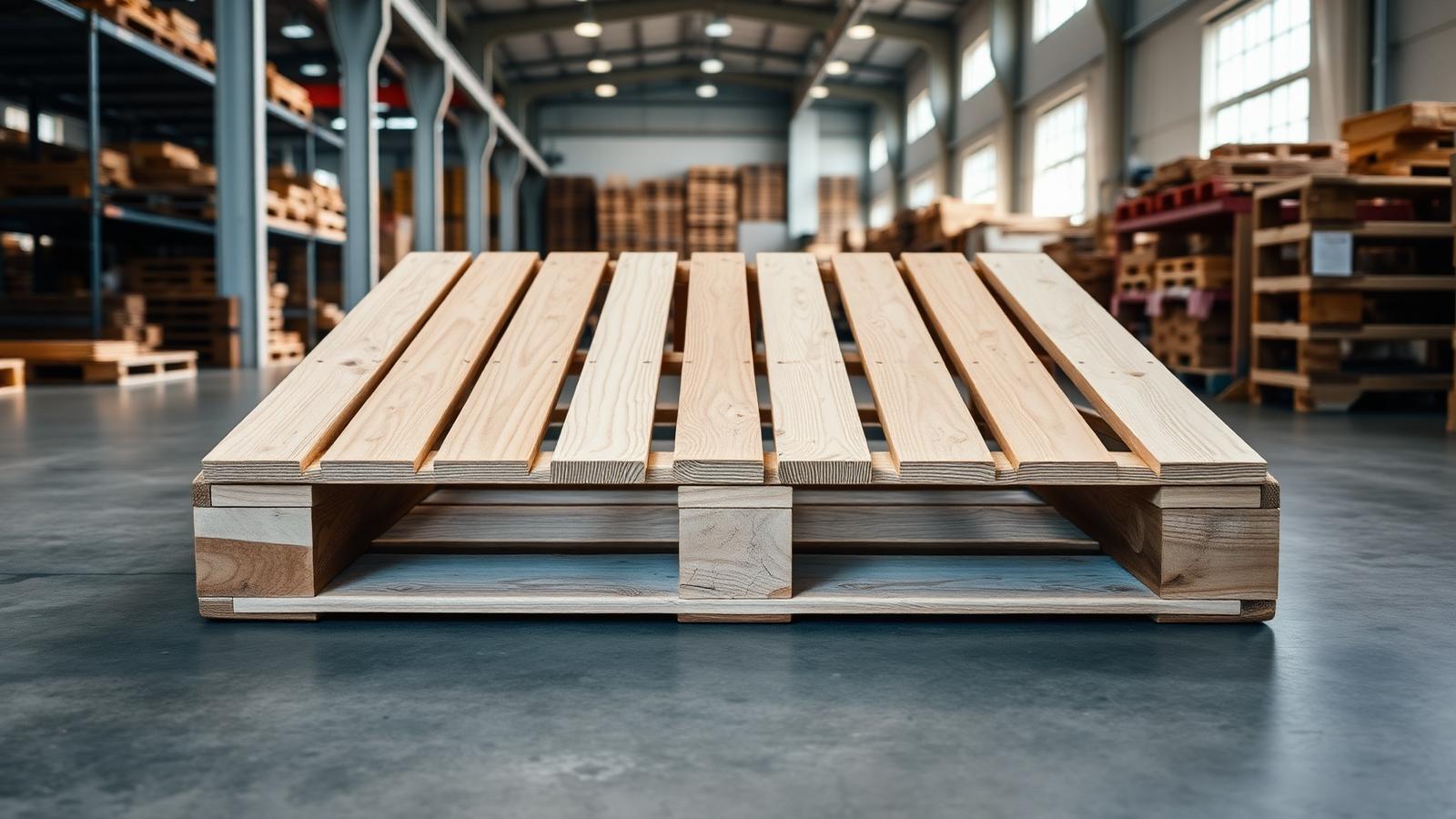
Every pallet starts as fresh-cut lumber. Boards and stringers are cut to spec, assembled, and inspected before they ever carry a load.
New pallets are built for demanding first runs — heavy loads, export shipments, food-grade environments, and customers who need a clean, uniform platform every time. We build standard 48×40 GMA pallets, custom sizes, and heavy-duty designs based on what each customer's product actually needs.
- Cut and graded lumber assembled to spec
- Built for the customer's load weight and footprint
- Inspected before leaving the yard
Stage 2: In Service
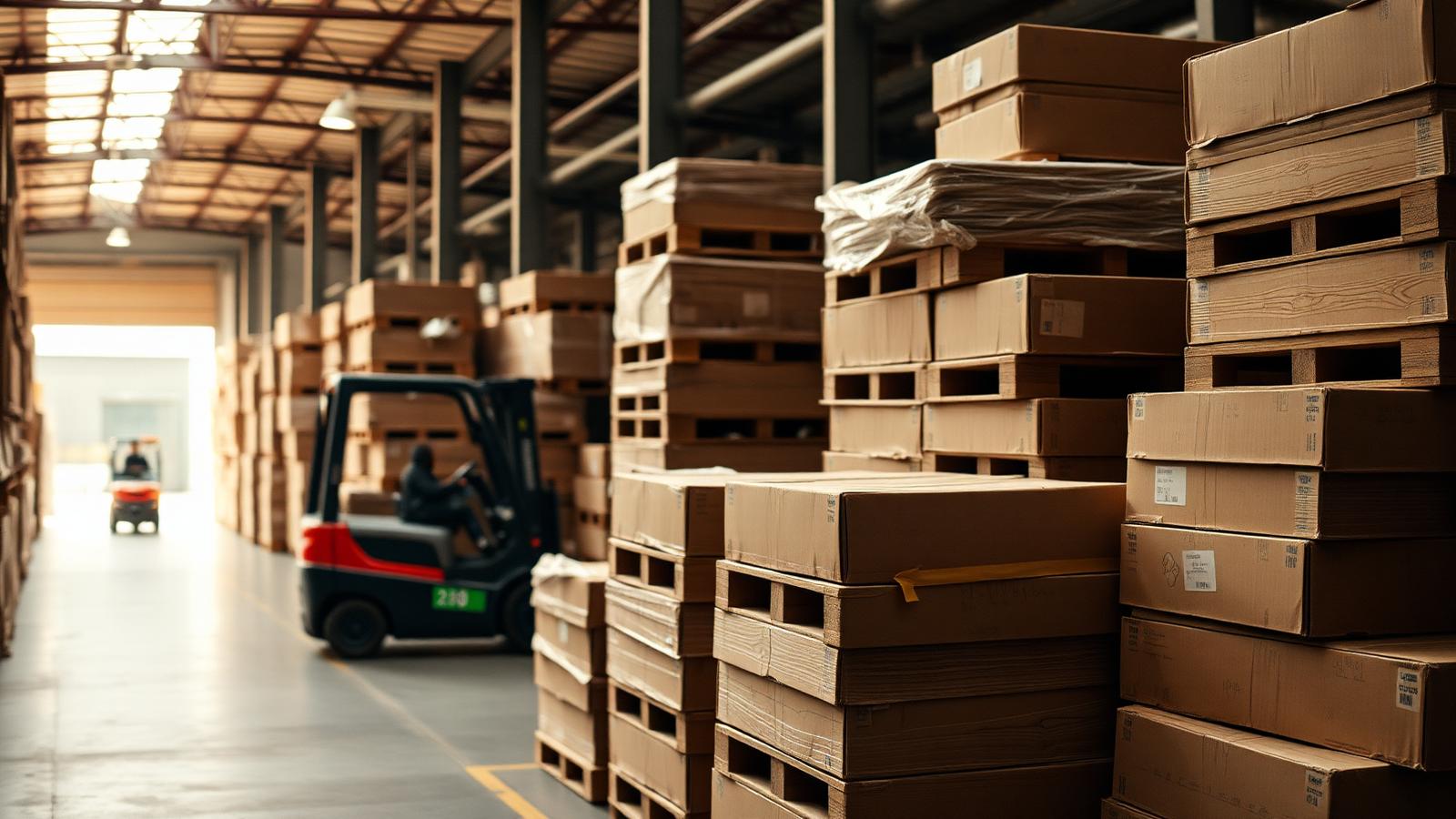
Once a pallet enters circulation, it goes to work. A well-built wooden pallet typically makes 5 to 7 trips before it needs any attention — moving between manufacturers, distributors, warehouses, and retailers.
Each trip puts wear on the deck boards, stringers, and corners. That's normal. The point of a wooden pallet is that it's designed to be repaired, not thrown away.
Stage 3: Repaired and Reused — Again and Again
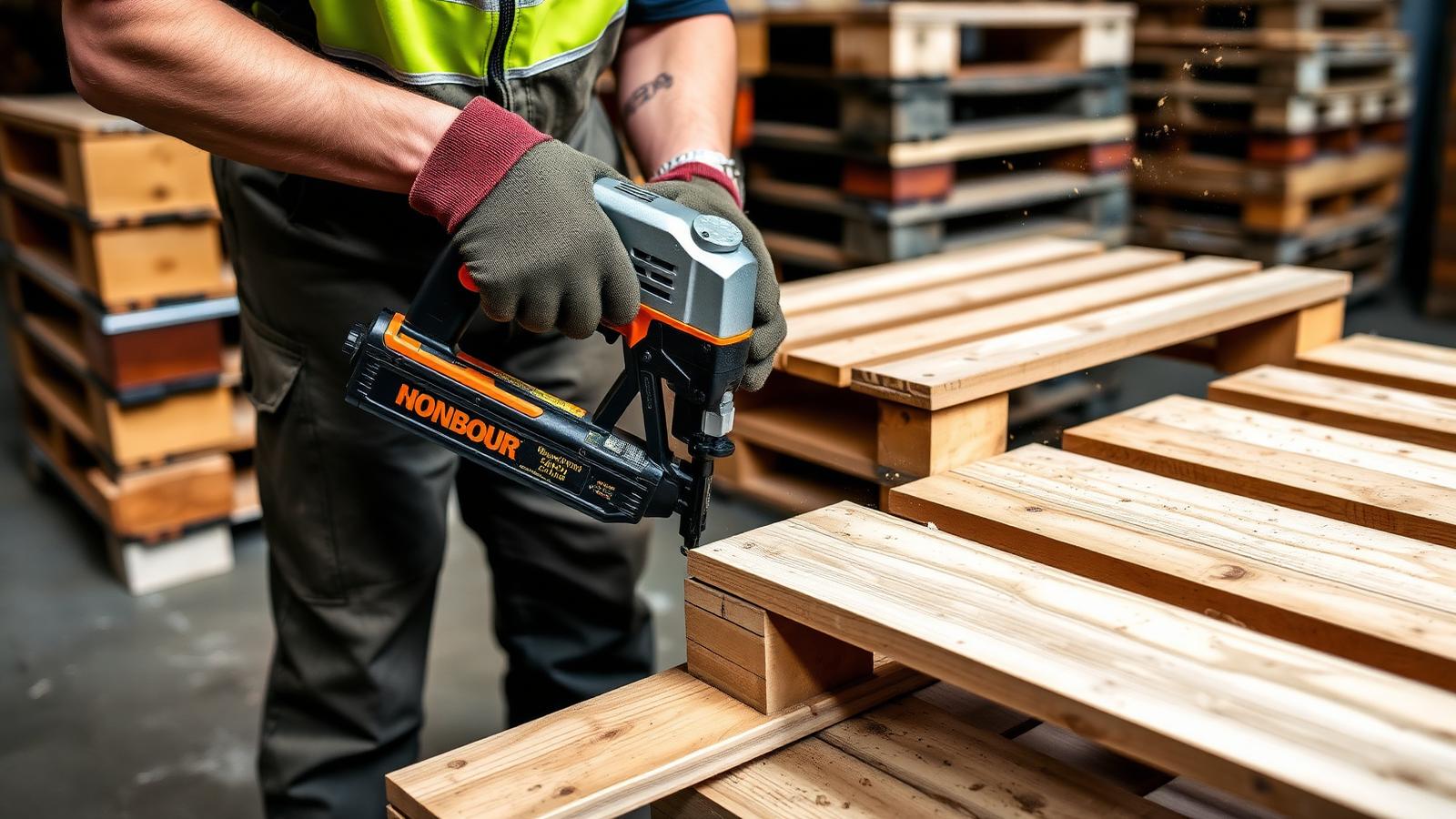
When pallets come back to our yards, they're sorted by grade and routed to our repair team. Damaged boards are replaced, broken stringers are reinforced or swapped, and the pallet is re-inspected before it goes back out.
A single pallet can be repaired multiple times over its life. Each repair extends its service for another round of trips, which is exactly what makes recycled pallets such a cost-effective option for buyers:
- Lower price than new for comparable performance
- Less lumber harvested for each shipment moved
- Fewer pallets headed to disposal
- Reliable supply pulled from the same closed loop
Repaired pallets are graded — AAA, AA, A, B — so customers can match the pallet to the job instead of overpaying for spec they don't need.
Stage 4: Ground Into Mulch
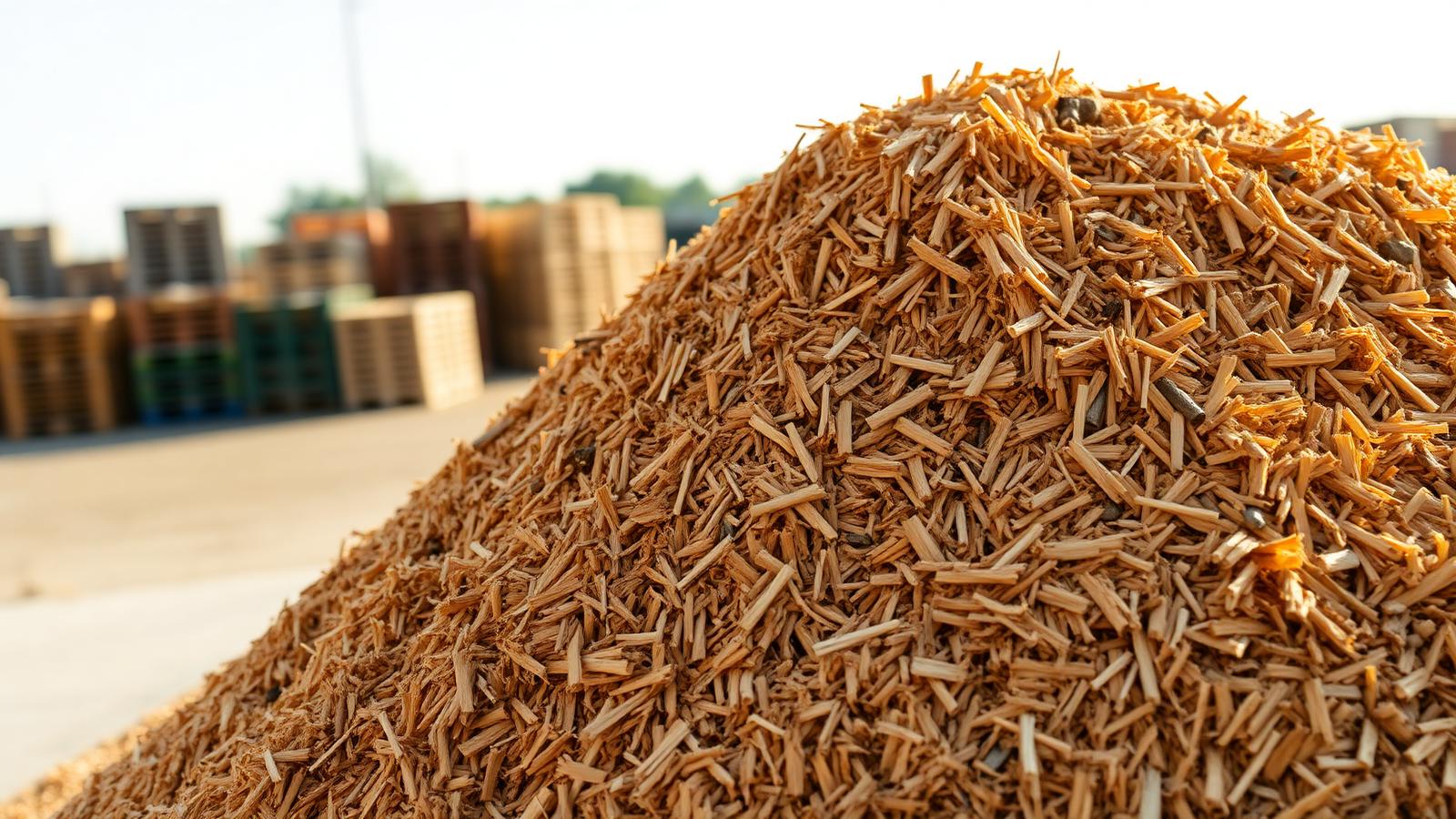
Eventually, every pallet reaches a point where repair no longer makes sense. The wood has done its job. Instead of sending it to a landfill, we send it through the grinder.
Pallets at end of life are processed into clean wood fiber and turned into mulch at our Akron facility. That mulch goes to landscapers, municipalities, and homeowners across the region — moisture retention in summer, weed suppression on installs, a clean finish for curb appeal.
It's the final stage of the cycle, and it's the one that closes the loop. The same wood that started as a freshly built pallet ends up back in the ground, feeding the next thing that grows.
Why the Full Cycle Matters
A pallet that's built well, repaired thoughtfully, and recycled at end of life isn't just a shipping platform — it's a closed-loop system. For customers, that means lower cost, reliable supply, and a real sustainability story to tell. For the industry, it means less waste and more value pulled from every board.
Whether you're buying new, sourcing recycled, recycling pallets back to us, or picking up a load of mulch, you're part of the same cycle we've been running for decades.
To talk through new builds, recycled grades, pickups, or mulch availability, contact Tri County Pallet at (330) 848-0313.