Logistics · Sep 23, 2026
A Checklist for Evaluating Your Pallet Recycling Vendor Performance
Written by TC Pallet
For manufacturers and distributors in Northeast Ohio, the pallet recycling partner is a critical link in the supply chain. If your dock is cluttered with broken wood or your production line is waiting on a delivery of grade A recycled cores, your throughput suffers. Many logistics managers treat pallet recycling as a set-it-and-forget-it service, but neglecting a periodic pallet vendor audit can lead to hidden costs, safety hazards, and operational bottlenecks.
A high-performing vendor should do more than just drop off a trailer. They should act as a reliable outlet for scrap wood and a consistent source of quality-checked inventory. Evaluating your vendor requires looking at hard data rather than relying on gut feelings. By measuring specific key performance indicators, you can determine if your current provider is supporting your facility or slowing it down.
Evaluating Pick-Up Reliability and Turnaround
The most visible sign of a failing pallet recycling partner is a congested shipping dock. When trailers aren't swapped on time, floor space that should be used for finished goods becomes a graveyard for broken pallets. You should track the lead time between a request for a pick-up and the actual arrival of the truck. A standard expectation for high-volume facilities is a 24 to 48-hour window. If your vendor consistently misses this window, you are essentially paying for their storage problems with your own square footage.
Reliability also extends to equipment availability. A vendor should have a sufficient pool of drop-trailers to ensure your team can load scrap wood as it is generated. If you find yourself double-handling pallets—moving them to a corner of the warehouse because the trailer is full and no replacement is in sight—your labor costs are increasing unnecessarily.
Analyzing Sortation Accuracy and Grade Integrity
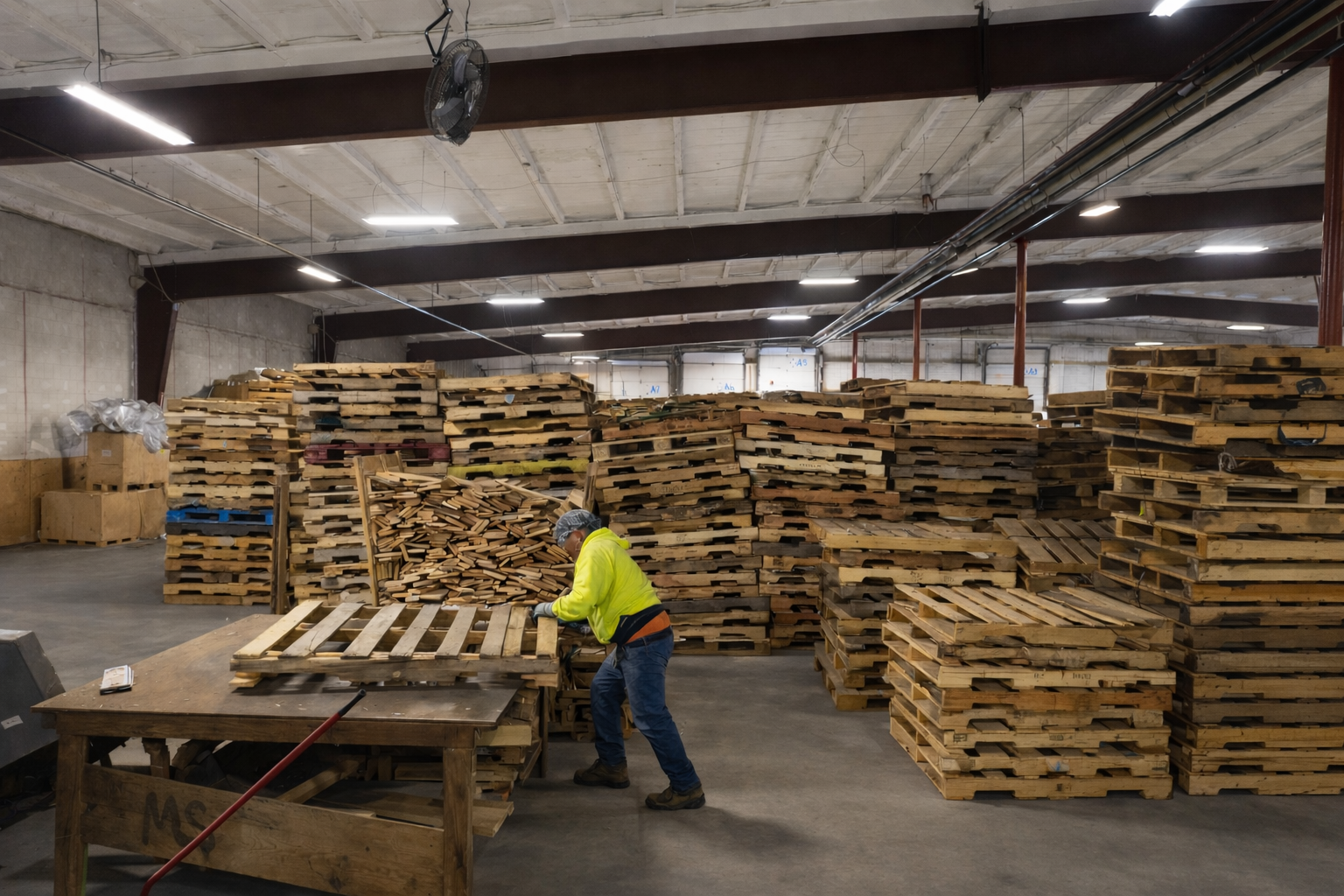
The financial health of your pallet supply chain depends on how your cores are graded. When a vendor picks up a mixed load, they sort those pallets into categories: Grade A, Grade B, and scrap. A common point of friction occurs when a vendor's sort report doesn't match the quality of what was sent. While some variation is expected due to hidden damage like hairline cracks in stringers, a consistent downward trend in grading could indicate a lack of transparency.
- Consistent grading: Does the ratio of Grade A to Grade B cores remain stable over time?
- Load rejection rates: How often are you receiving recycled pallets that fail to meet your internal quality standards?
- Repair capabilities: Is the vendor properly repairing pallets with plugs and companion stringers to industry standards?
- Scrap wood handling: Is the vendor effectively grinding non-repairable wood into mulch rather than sending it to a landfill?
Billing Transparency and Reporting
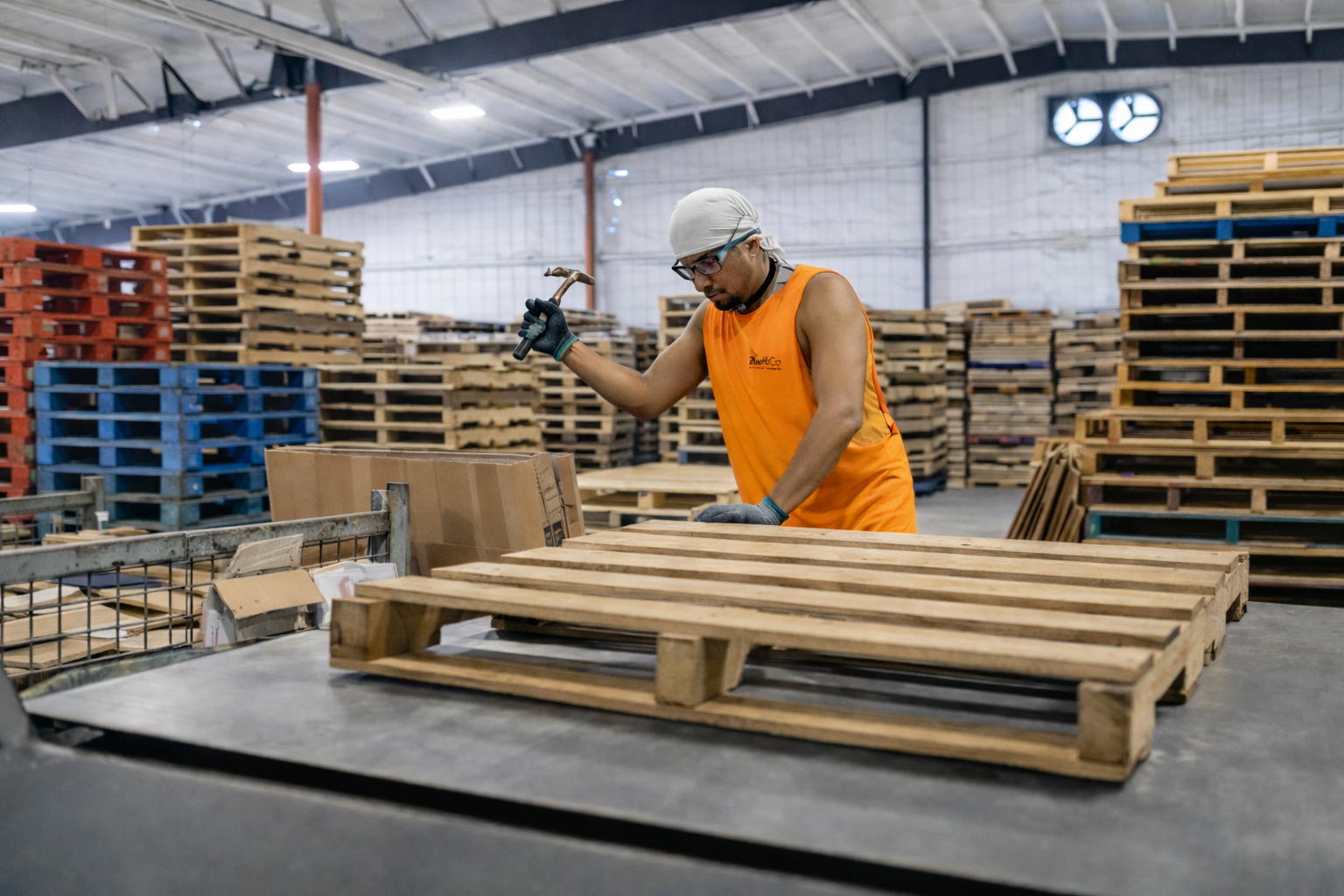
A professional pallet vendor should provide clear, timely documentation for every transaction. This includes detailed bill of lading records and sortation reports that break down the credit given for reusable cores versus the cost of hauling scrap. If your billing arrives weeks late or lacks detail, it becomes nearly impossible to audit your expenses or forecast your pallet needs for the next quarter.
Check if your vendor provides a clear credit structure. Many manufacturers benefit from a program where the value of their recycled cores offsets the cost of buying new or reconditioned pallets. If your vendor cannot provide a line-item breakdown of these credits, you may be leaving money on the table. Transparency in billing is a hallmark of a vendor that values a long-term partnership over a quick transaction.
Total Cost of Ownership and Value-Added Services
Price per pallet is only one part of the equation. The total cost of ownership includes the labor spent managing the vendor, the cost of lost production time due to pallet shortages, and the risk associated with poor-quality wood. A vendor that offers comprehensive services—such as new pallet construction, recycled pallet supply, and scrap-wood hauling—reduces the administrative burden of managing multiple contractors.
In Northeast Ohio, logistics leads should also look at the vendor's ability to handle waste wood. If your partner is just a broker, they might struggle to move odd-sized scrap or damaged dunnage. A vendor like Tri County Pallet, which operates its own grinding equipment to produce ground mulch, ensures that even the most damaged wood has a final, useful destination. This circular approach keeps your facility clean and supports your environmental goals.
At Tri County Pallet, we focus on providing consistent service and transparent reporting for manufacturers throughout Akron and the surrounding areas. If your current pallet vendor audit reveals gaps in reliability or quality, we can help streamline your operations with our repair and recycling programs. To discuss your facility's needs or to request a quote, contact our team at (330) 848-0313.