Logistics · Sep 7, 2026
Will AI Replace Pallet Buyers?
Written by TC Pallet
The rise of artificial intelligence has every industry questioning the longevity of human roles. For pallet buyers and warehouse purchasing managers across Northeast Ohio, the conversation usually centers on automation and data. On paper, software can track price fluctuations and predict when a manufacturing floor will run out of shipping platforms. In practice, the pallet industry relies on physical wood, fluctuating grade quality, and the unpredictable nature of logistics.
AI is a tool for the modern buyer, not a replacement. It excels at sorting through spreadsheets and identifying patterns that a human might miss during a busy shift. However, a pallet is a physical commodity that requires eyes-on inspection and local coordination. Understanding the gap between digital forecasting and the actual warehouse floor is how operations managers stay ahead of supply shortages.
Where AI Supports the Pallet Supply Chain
For a buyer managing multiple facilities, AI-driven software helps stabilize the pallet supply chain by refining procurement schedules. Instead of reacting to an empty bay, software can look at historical shipping data and seasonal spikes to suggest an order date. This level of forecasting reduces the need for emergency spot-buying, which is almost always the most expensive way to acquire lumber.
Data can also help track the lifecycle of a recycled pallet. A standard wooden pallet often makes several trips before it requires maintenance. When a buyer uses data to track how often their pallets return to the facility in usable condition versus how many are lost or damaged, they can better calculate their true cost per trip. This allows for more informed decisions between buying new units or investing in a consistent repair and return program.
The Limits of Digital Procurement
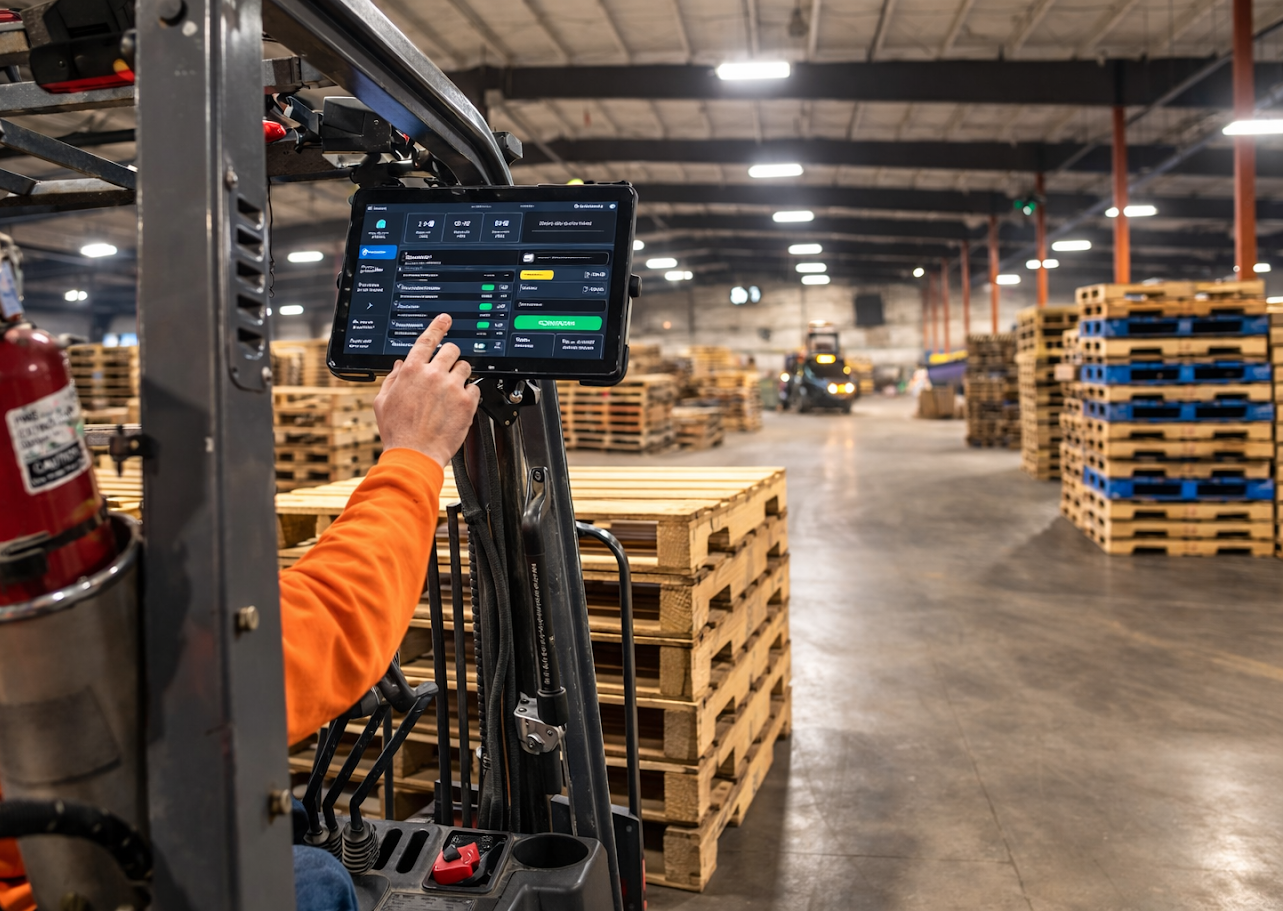
Software cannot step onto a trailer to inspect the stringers on a load of #2 recycled pallets. In our experience serving Akron and the surrounding areas, the biggest challenge for pallet buyers is consistency. A computer sees a line item for a 48x40 pallet, but it does not see the difference between a high-quality repair and a pallet that is one heavy load away from failure. Physical quality control remains a human responsibility.
- Visual grading of reclaimed lumber to ensure weight capacities are met.
- Managing unexpected scrap-wood accumulation that exceeds storage space.
- Negotiating custom pallet dimensions for non-standard manufacturing runs.
- Coordinating urgent pickup for recycling when a warehouse floor becomes a safety hazard.
- Adjusting orders based on the real-world moisture content and wood species available in the local market.
Integrating Data with Local Expertise
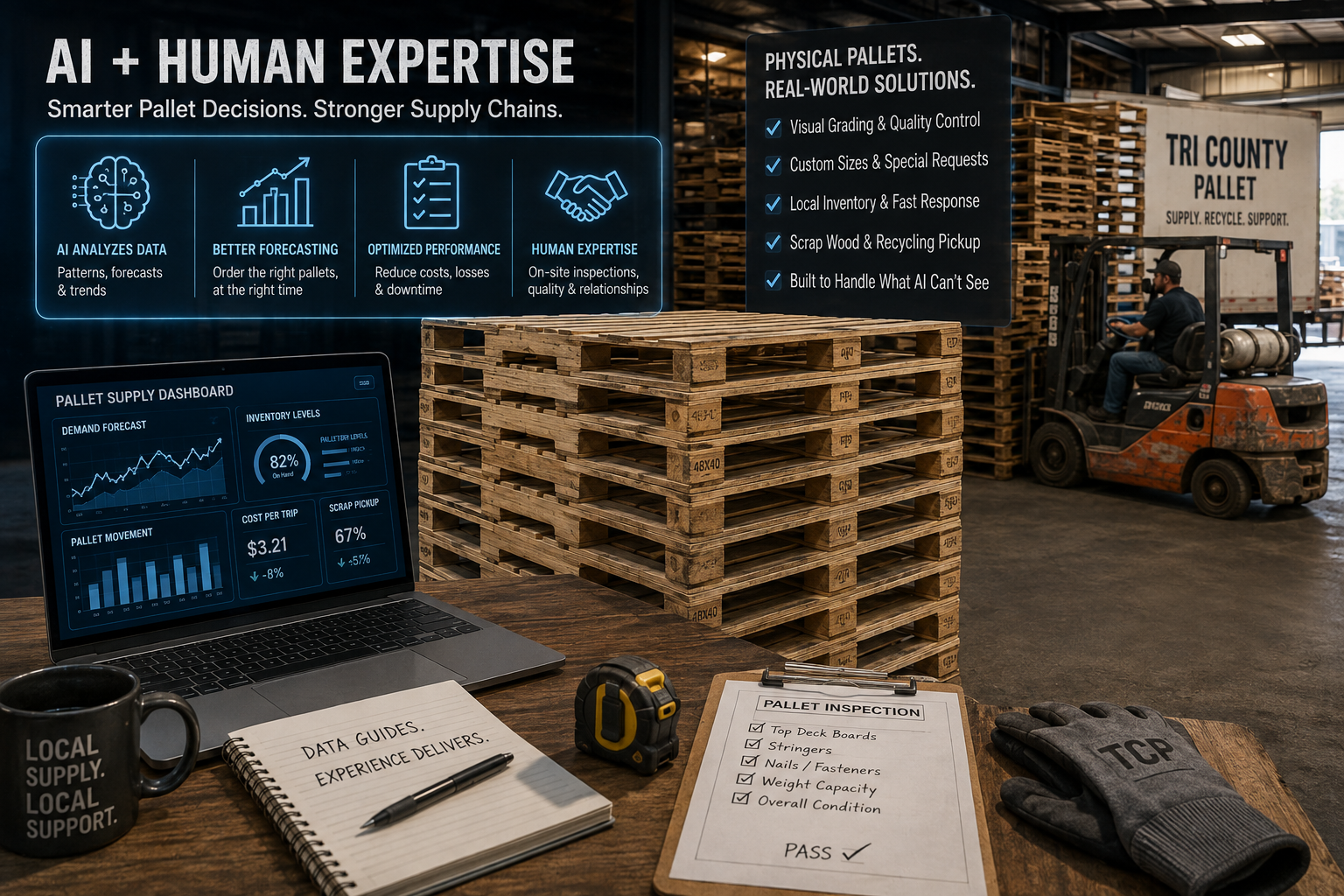
The most effective pallet buyers use AI to handle the mundane tasks so they can focus on the relationship with their pallet supplier. When the data suggests a surge in production is coming, the buyer can communicate that to their partner early. This human-to-human connection ensures that when the trucks show up, the pallets are actually built to the necessary specifications and the trailers are ready for loading.
Beyond procurement, many facilities use tech to manage the back-haul. When a manufacturer has a surplus of broken pallets, an automated system might flag the inventory level, but it takes a local partner to provide the recycling pickup and haul-off. Whether that wood is destined for repair or ground into mulch, the logistics require a physical fleet and a team that understands the local geography.
The Future of Warehouse Purchasing
The role of the pallet buyer is shifting from a focus on simple order entry to a focus on supply chain strategy. AI will likely take over the repetitive parts of the job, such as invoice processing and basic inventory counting. This frees up the purchasing manager to look at more sustainable options, like shifting from new wood to high-quality recycled pallets or implementing a more efficient scrap recovery system.
The supply chain will always require a mix of digital efficiency and physical reliability. No amount of software can replace a truck driver arriving on time or a saw operator ensuring a pallet is built square. Buyers who embrace the data while maintaining strong ties to their local suppliers will be the ones who avoid the disruptions that often plague larger, purely automated networks.
At Tri County Pallet, we provide the practical support that software cannot. Whether you need a consistent supply of new or recycled pallets, or a reliable team to handle your scrap wood and recycling, we are here to help your operations run smoothly. Call our team at (330) 848-0313 to discuss your current pallet needs and how we can support your facility.